

Fresh Breath
Step-by-Step Guide to Get Fresh Breath and Avoid Bad Breath in the Morning

Executive Summary
Waking with unpleasant breath is common, often leaving us wondering how to remedy bad breath in the morning.
This guide provides a powerful, dentist-recommended morning routine to maintain fresh breath throughout your day. We’ll delve into the science behind bad breath in the morning, offer practical, step-by-step oral hygiene practices, and share essential lifestyle adjustments. Our goal is to help you stop bad breath at its source. Get ready to transform your mornings and embrace a more confident you.


Understanding Morning Breath
 Ever wondered why your breath seems worse after waking? Reduced saliva production during sleep creates an ideal breeding ground for oral bacteria. This section explores the primary culprits behind bad breath in the morning.
The Culprits: Bacteria, Dry Mouth, and Volatile Sulfur Compounds (VSCs)
Beyond Basic Biology: Diet, Lifestyle, and Medical Contributors
 While bacterial activity drives morning breath, other factors exacerbate it. Strong-odored foods like garlic or spicy dishes can release VSCs hours later. Smoking and alcohol also contribute to dry mouth. Medical conditions such as sinus infections, acid reflux, or systemic diseases like diabetes can also cause persistent bad breath. Addressing these root causes, alongside a robust oral hygiene routine, is key to preventing morning bad breath naturally.
Your Ultimate Dentist-Recommended Morning Routine for Fresh Breath
 Achieving and maintaining fresh breath begins with a thorough morning routine. This step-by-step guide incorporates expert advice to help you stop bad breath.
- Step 1: Hydrate Immediately: First, drink a large glass of water upon waking. This jumpstarts hydration, stimulates saliva, and rinses away bacteria. It's an internal flush that helps clear bad breath from the inside out. Dehydration significantly contributes to dry mouth. The American Dental Association emphasizes hydration for healthy saliva flow and combating halitosis, a crucial step for oral microbiome balance.
- Step 2:Thorough Oral Cleansing: Your brushing technique and tools are paramount. Extend your focus to your entire mouth to truly get fresh breath. Brush each morning with an electric toothbrush and a stannous fluoride paste. Be sure to brush your tongue as it is a major reservoir for odor-causing bacteria. A tongue scraper can also help effectively removes this film. Gently scrape your tongue from back to front 2-3 times. Studies in the Journal of Periodontology show daily tongue scraping reduces VSC levels significantly. This is a key halitosis remedy.
- Step 3: Flossing for Hidden Culprits: Flossing is crucial for anyone wanting to stop bad breath. Trapped food particles between teeth and under gums decompose, releasing VSCs. Flossing removes these hidden culprits where a toothbrush cannot reach. Floss your teeth at least once daily with Oral-B floss to prevent tooth decay, reduce gum disease risk, and ensure gum health and breath are optimized.
- Step 4: Rinse and Refresh – Choosing the Right Mouthwash: Swish with Crest Mouthwash. Choose an antibacterial, alcohol-free mouthwash containing ingredients like cetylpyridinium chloride (CPC) or essential oils, which target bacteria instead of just masking odor. Alcohol can worsen dry mouth. Swish for 30-60 seconds. A good mouthwash significantly reduces bacterial load and immediately freshens breath.
Regular Dental Check-ups: Your First Line of Defense
Hydration Throughout the Day: Keeping Saliva Flowing
Diet Adjustments: What You Eat Matters
 Your diet impacts breath. Minimize odorous foods like garlic before social interactions. Sugary foods feed oral bacteria. Incorporate fresh fruits and vegetables, which stimulate saliva. Chewing sugar-free gum after meals also aids saliva flow. Understanding dietary impact on breath freshness is a powerful strategy for fresh breath.
Conclusion
Tips for Good Oral Health
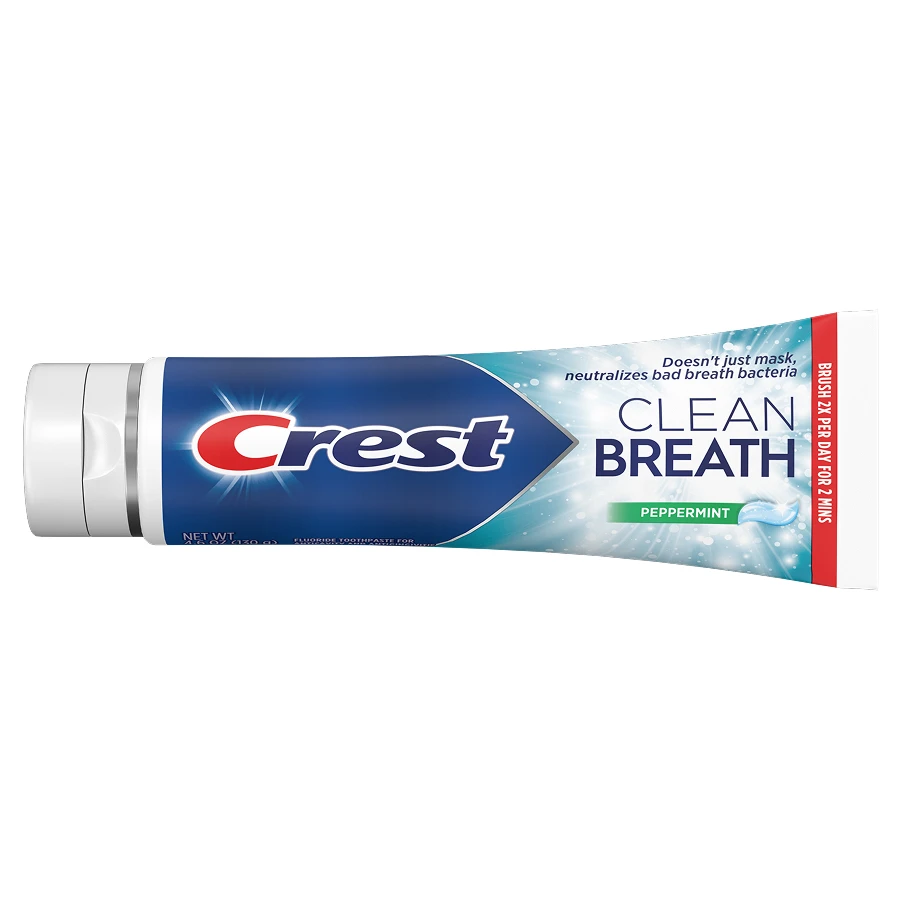
- Start your routine with Crest Clean Breath Toothpaste. This stannous fluoride formula works around the clock, actively fighting the bacteria that cause cavities and bad breath, so you enjoy a long-lasting, fresh, and clean feeling.
- Elevate your freshness with a mouthwash. These are essential for reducing odor-causing bacteria and neutralizing Volatile Sulfur Compounds (VSCs) – the main culprits behind bad breath. Reach for Crest Mouthwash not just for superior cavity and tartar protection, but to complete your routine with an invigorating, long-lasting clean and fresh feeling.
- The Oral-B iO electric toothbrush, for instance, removes significantly more plaque than a manual brush, attacking the root cause of tooth decay, gum disease and bad breath. Experience a truly deep clean that leaves your smile feeling remarkably fresh and vibrant.
- Oral-B iO Ultimate Clean brush head is engineered with unique bristle lengths to reach deep into the hidden spaces between your teeth, dislodging stubborn plaque and the odor-causing bacteria that love to hide there. This ultimate clean is key to a perpetually fresh and healthy smile.
- Complete your oral care ritual by flossing at least once daily with Oral-B floss. Flossing is crucial for reaching the tight spaces where food particles and plaque accumulate. By meticulously removing these odor sources, you ensure every surface of your teeth is clean, contributing to an undeniable fresh and clean smile.


Can certain foods make bad breath in the morning worse?
Is an electric toothbrush better for getting fresh breath than a manual one?
How often should I visit the dentist to help maintain fresh breath?
Can dry mouth cause persistent bad breath?
What's the fastest way to clear bad breath in the morning if I'm in a rush?
Sources
- American Dental Association (ADA): Information on oral hygiene, dry mouth, and breath freshening.
- Mayo Clinic: Articles on halitosis (bad breath) causes and treatments.
- Adam R. (2020). Introducing the Oral-B iO electric toothbrush: next generation oscillating-rotating technology. International Dental Journal, 70 Suppl 1(Suppl 1), S1–S6. https://doi.org/10.1111/idj.12570
- Biesbrock, A., et al. (2006). Assessment of treatment responses to dental flossing in twins. Journal of Periodontology, 77(8), 1386–1391. https://doi.org/10.1902/jop.2006.050399
- Cheng, R., et al. (2014). Breath and plaque prevention with cetylpyridinium chloride rinses: clinical meta-analysis. Journal of Dental Research, 93, 573.
- Zsiska, M., et al. (2021). Investigation of oral malodor prevention by dentifrices as measured by VSC reduction. Journal of breath research, 15(3), 10.1088/1752-7163/abf209. https://doi.org/10.1088/1752-7163/abf209