
Gum Health
White Gums: Causes, Symptoms, And Treatments

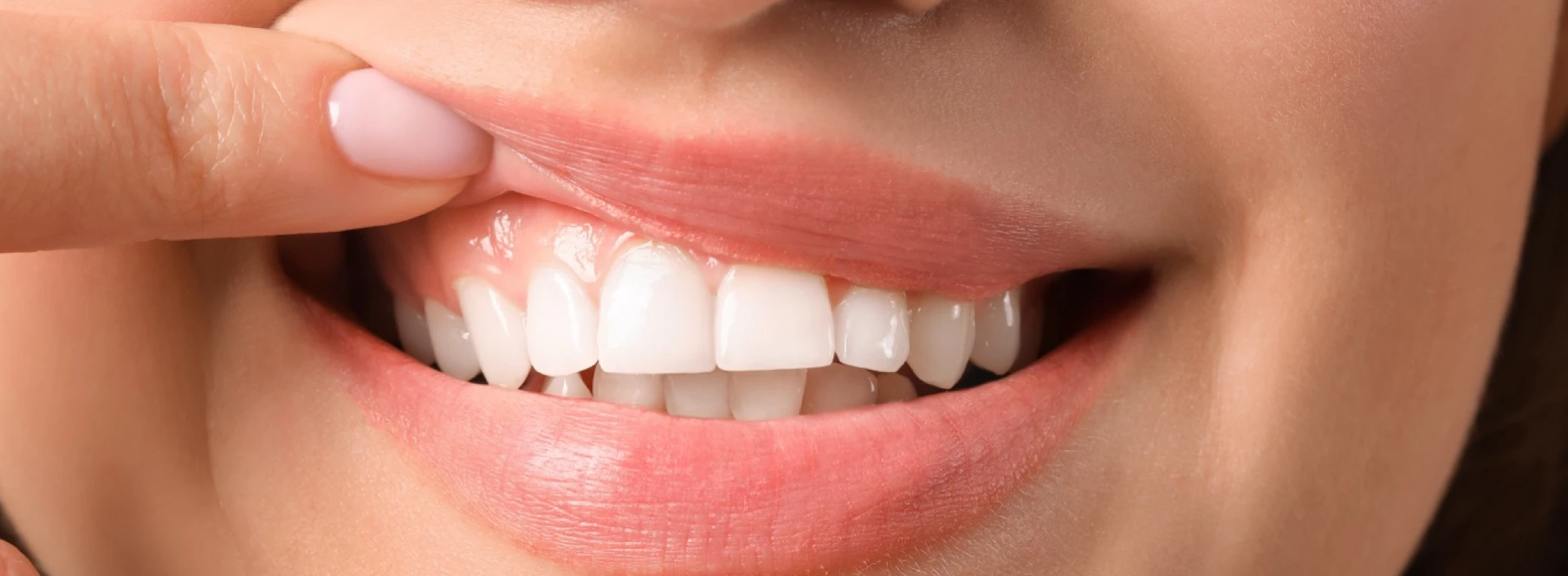
Normally, healthy gums display a pinkish hue, so if you notice white gums in your mouth, it’s important to monitor the situation. White gums can signal dehydration or inadequate oral care. However, they can also be a symptom of other health conditions, especially if accompanied by other issues or pain in your mouth. While white gums can sometimes be resolved by enhancing your oral hygiene routine, including effective brushing and flossing, identifying the root cause is crucial. Be sure to consult your dentist if your white gums persist long-term or if you experience other symptoms.


White Gums
White Gum Symptoms
- Gingivitis – A bacterial infection of the gums, potentially manifesting as red, inflamed, or swollen gums.
- Canker Sores – Oval-shaped sores in your mouth that may appear white or yellow and typically heal within 2-4 weeks.
- Anemia – Occurs due to low blood flow and can be linked to low iron, Vitamin B-12 levels, and diet. May also cause feelings of weakness or paleness.
- Oral Candidiasis – Also known as oral thrush, this is a yeast infection in your mouth. Sometimes, it requires antifungal medication to heal.
- Leukoplakia – Presents as thick, white patches inside the mouth that cannot be scraped off. It is frequently associated with tobacco and alcohol use. As it can be a precancerous condition, any suspected signs of leukoplakia should be immediately evaluated by a dentist.
- Oral Cancer – A serious condition indicated by small, flat, white, red, or flesh-colored bumps in your mouth. Consult a dentist if you notice any symptoms.
White Gum Causes and Reasons
Pale Gums and Causes
White Gum Diagnosis and Treatments
Consistent Oral Hygiene Helps Gum Health
- Crest Gum Detoxify Toothpaste contains stannous fluoride, which neutralizes the plaque bacteria responsible for gum disease. Pair that with an Oral-B iO electric toothbrush to help reduce gum bleeding and reverse early signs of gum disease.
- Our mouthwashes, like Crest Pro-Health Multi-Protection Mouthwash, are clinically proven to offer 24-hour protection against plaque and gingivitis when used twice daily.
- When you brush with Oral-B iO electric toothbrushes, you can safeguard your gums and help prevent further gum recession. Oral-B iO assists in avoiding new tooth and gum issues—and if you already have existing gum problems like gingivitis, it can help improve your gum health more rapidly than a manual toothbrush.
- The correct toothbrush head also significantly contributes to effective cleaning without gum irritation. Pair your toothbrush with an Oral-B Gentle Care brush head, which is designed to provide an effective clean while being gentle on sensitive areas and gums.
- Dental floss, used daily, helps prevent gingivitis as part of a comprehensive dental plan. Seek a floss that can fit more easily into tight spaces, such as Glide Floss.


Why are my gums white?
Why is there a white spot on my gum?
What does it signify when gums are white?
Do gums turn white during healing?
Do white gums indicate dehydration?
Sources
- https://www.medicalnewstoday.com/articles/321914
- https://www.healthline.com/health/white-gums#treatments
- Chen, C. K., et al. (2017). Association between chronic periodontitis and the risk of Alzheimer’s disease: A retrospective, population-based, matched-cohort study. Alzheimer’s Research & Therapy, 9, 56. https://doi.org/10.1186/s13195-017-0282-6
- Goyal, C. R., et al. (2021). A 6-month randomized controlled trial evaluating a novel smart-connected oscillating-rotating toothbrush versus a smart-connected sonic toothbrush for the reduction of plaque and gingivitis. American Journal of Dentistry, 34(1), 54-60. https://pubmed.ncbi.nlm.nih.gov/33544990/
- Grossi, S. G., et al. (1998). Periodontal disease and diabetes mellitus: A two-way relationship. Annals of Periodontology, 3, 51-61. https://doi.org/10.1902/annals.1998.3.1.51
- Janket, S. J., et al. (2003). Meta-analysis of periodontal disease and risk for coronary heart disease and stroke. Oral Surgery, Oral Medicine, Oral Pathology, Oral Radiology, and Endodontology, 95, 559-569. https://doi.org/10.1067/moe.2003.107
- Klukowska, M., et al. (2017). Clinical Effects of Stabilized Stannous Fluoride Dentifrice in Reducing Plaque Microbial Virulence I: Microbiological and Receptor Cell Findings. The Journal of Clinical Dentistry, 28(2), 16–26.
- Natarajan, P., et al. (2025) Investigating the link between oral health conditions and systemic diseases: A cross-sectional analysis. Scientific Reports. 15; 10476. https://doi.org/10.1038/s41598-025-92523-6
- Sutor, S., et al. (2025). Effect of a powered and a manual toothbrush in subjects susceptible to gingival recession: A 36-month randomized controlled clinical study. International Journal of Dental Hygiene, 23(1), 26–36. https://doi.org/10.1111/idh.12834