
Oral Hygiene
Impacted Tooth: Types, Signs, Symptoms & Treatment

This blog has been reviewed and approved by Dr. Stephanie Gans.
An impacted tooth occurs when a tooth is obstructed from fully emerging past the gumline and cannot attain its correct position. Such impacted teeth can lead to oral discomfort and pain, potentially affecting your overall oral health. Always consult a dentist if you notice redness or any other symptoms in your mouth and suspect an impacted tooth. They can accurately diagnose and treat the issue. In some cases, extracting the tooth may become necessary. Consistently maintain good oral hygiene to prevent tooth infections as teeth develop.
key Takeaways
TABLE OF CONTENTS
TABLE OF CONTENTS
Impacted teeth develop improperly and can cause significant pain and other dental issues if not addressed promptly. However, teeth that are blocked from fully erupting through the gums sometimes exhibit no symptoms at all. If you experience oral discomfort or observe teeth that are not completely emerging from the gums, consult your dentist. They can inform you about the best treatment options and what might be happening in your mouth. Always adhere to your oral care routine to prevent tooth infections.
What is an Impacted Tooth?
An impacted tooth is one that becomes lodged beneath the gumline or only partially breaks through, due to an obstruction from other teeth, bone, or soft tissue. A tooth can also be partially impacted, appearing as if it is attempting to emerge through the gumline. This condition can arise if there isn't sufficient space for the new tooth to grow in, if the tooth is developing crookedly, or if something is physically blocking its eruption. Impacted teeth necessitate evaluation by a dentist or orthodontist.
While some impacted teeth have no major effect on dental health, other situations may lead a dentist to recommend a tooth extraction or another form of treatment. The approach to an impacted tooth largely depends on its potential impact on your oral health. When you notice an impacted tooth, have it examined by a dentist promptly, as it can lead to infections or other dental issues in your mouth.
Are Impacted Teeth Common?
Impacted teeth are a frequent occurrence during one's developmental years. Approximately 9 out of 10 individuals experience at least one impacted wisdom tooth by early adulthood. It is common to undergo dental surgery either to remove the wisdom tooth or to assist its proper eruption.
Impacted Tooth Signs and Symptoms
Impacted teeth present with various signs and symptoms, which differ based on your unique oral health condition. You might have an impacted tooth if you observe any of the following symptoms:
- Jaw pain
- Red, swollen gums
- Bad breath
- Difficulty opening your mouth
- Headaches
Impacted Tooth Treatment
Typically, a dentist will utilize x-rays to determine the appropriate treatment for an impacted tooth. Depending on its growth pattern, a dentist may need to extract the tooth. Your dentist will examine your mouth and establish the correct treatment for your impacted tooth and any other underlying concerns. Extracting an impacted tooth is a common treatment that dentists may recommend.
Schedule regular visits to your dentist or dental hygienist for dental cleanings and exams, particularly when new teeth are erupting. Diligently caring for your oral health and brushing and flossing daily can also help you notice if any other tooth symptoms emerge.
Types of Impacted Teeth
The primary categories of impacted teeth include:
- Soft tissue impaction
- Partial bony impaction
- Full bony impaction
- Mesial: Angled toward the front of the mouth—this is the most prevalent type.
- Vertical: Upright but trapped beneath the gumline.
- Horizontal: Lying completely on its side.
- Distal: Angled backward towards the rear of the mouth.
Oral Health Issues and How to Prevent Them
Common oral health issues include cavities and tooth decay, gum disease, staining, and sensitivity. The main culprit behind these is often plaque buildup, a sticky bacterial film that forms on teeth. By consistently following a complete oral care routine, you can preemptively tackle these issues, leading to a stronger, healthier smile:
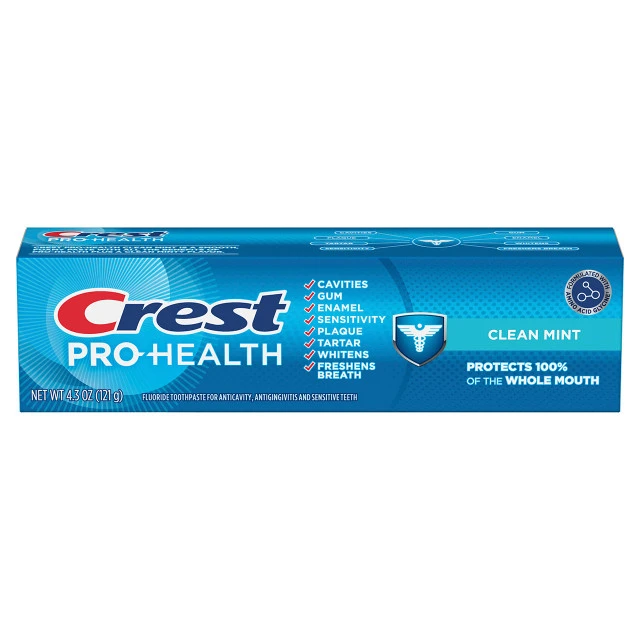
- Protect Your Smile with Crest Pro-Health Toothpaste: Ensure you brush twice a day with a stannous fluoride toothpaste. Not only does it help combat cavities and tooth decay, but a Crest toothpaste formulated with stannous fluoride also strengthens enamel, fights sensitivity, and provides lasting protection against plaque bacteria with twice-daily brushing.
- Rinse with Crest Pro-Health Mouthwash: Swish with an antibacterial mouthwash like Crest Pro-Health Mouthwash to help eliminate plaque bacteria, support gum health, and rinse away loosened food particles, leaving your mouth feeling clean and fresh.
- Brush 2x/day with an Oral-B iO Electric Toothbrush: An an Oral-B iO, electric toothbrush helps remove 100% more plaque than a regular manual toothbrush. Its dentist-inspired round brush head envelops each tooth, adapting to the contours of teeth and gums to ensure a cleaner, healthier smile—even in hard-to-reach areas.
- Complete your oral care ritual by flossing at least once daily with Oral-B floss. Flossing is crucial for reaching the tight spaces where food particles and plaque accumulate. By meticulously removing these odor sources, you ensure every surface of your teeth is clean, contributing to an undeniably fresh and clean smile.
TABLE OF CONTENTS
TABLE OF CONTENTS

FAQs

What does an impacted tooth signify?
An impacted tooth refers to a tooth that is not fully developing or erupting completely through the gumline.
How severe is an impacted tooth?
The seriousness of an impacted tooth can vary. Consult your dentist to assess the severity of your impacted tooth and determine the next steps.
Should impacted teeth always be removed?
Dentists do sometimes remove impacted teeth, but not in every situation.
What happens if an impacted tooth is left untreated?
Your dentist can inform you about the potential consequences of not treating an impacted tooth. Typically, impacted teeth can negatively affect other oral conditions and may lead to the development of an infection.
Sources
- https://my.clevelandclinic.org/health/diseases/impacted-tooth
- https://www.webmd.com/oral-health/what-to-know-tooth-impaction
- https://my.clevelandclinic.org/health/diseases/22296-impacted-wisdom-teeth
- https://aaoinfo.org/whats-trending/what-is-an-impacted-tooth/
- https://www.ada.org/resources/ada-library/oral-health-topics/home-care
- https://www.cdc.gov/oral-health/prevention/oral-health-tips-for-adults.html
- https://my.clevelandclinic.org/health/treatments/16914-oral-hygiene
- https://www.mayoclinic.org/diseases-conditions/wisdom-teeth/symptoms-causes/syc-20373808
- https://www.nidcr.nih.gov/health-info/oral-hygiene
- Biesbrock, A. R., et al. (2025). Randomized clinical trial evaluating kinetic benefits of desensitizing agents: Magnitude, onset, and stability of relief. Journal of periodontology, 10.1002/JPER.24-0688. Advance online publication. https://doi.org/10.1002/JPER.24-0688
- He, T., et al. (2022). Novel findings on anti-plaque effects of stannous fluoride. American Journal of Dentistry, 35(6), 297–307. https://pubmed.ncbi.nlm.nih.gov/36508185/
- Kiesow, A., et al. (2024). High-Resolution Characterization of Enamel Remineralization Using Time-of-Flight Secondary Ion Mass Spectrometry and Electron Microscopy. Caries Research, 58(4), 407–420. https://doi.org/10.1159/000535979
- Zou, Y., et al. (2024). A meta-analysis comparing toothbrush technologies on gingivitis and plaque. International Dental Journal, 74(1), 146-156. https://doi.org/10.1016/j.identj.2023.06.009